
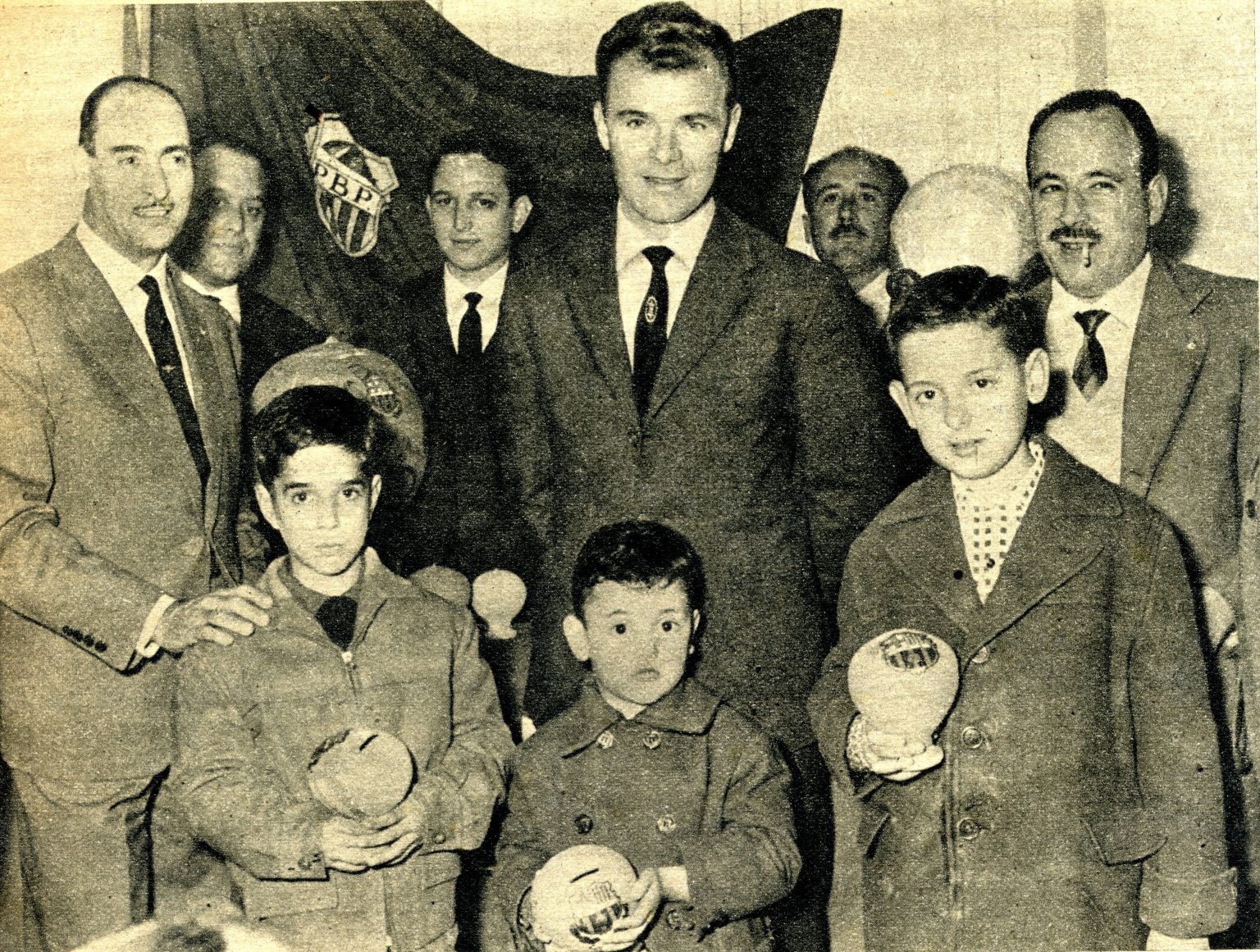
The Maresme region is one of the closest to Barcelona, so one might assume it would be among the first to experience the push of penyes expansion from the nerve center that was Barcelona. But it didn’t quite happen that way.
We’ve already written about this region in relation to the oldest penya, the Solera de Calella. However, despite its proximity to the Catalan capital, the two penyes created in the 1950s were more of a mirage, as there would be no real boom in the creation of Barça supporters’ clubs until the 1970s. In that decade, seven penyes emerged, joining the two pioneers from the 1950s and the three created in the 1960s, which we’ll discuss in later chapters.
Creation linked to the 1961 Bern final
The second penya founded in the 1950s was the Penya Barcelonista de Premià de Mar. Although it was founded in 1958, it wasn’t officially recognized until May 7, 1961 – four days after Barça reached the European Cup final in Bern following a tough knockout round against Hamburg.
It was a thrilling semifinal: Barça won the first leg 1-0 on April 12 at Camp Nou against a German side led by their star Uwe Seeler. In the return leg at the Volksparkstadion, Barça lost 2-1, which would have qualified them under the away goals rule that was introduced years later. Back then, however, a third match had to be played on neutral ground, which was Heysel Stadium in Brussels. On May 3, 1961, Barça defeated the German side 1-0 thanks to a goal by the great Brazilian striker Evaristo de Macedo, sparking joy among the young PB Premià de Mar members.
That joy turned into deep disappointment in the European Cup final in Bern on May 31, remembered as the cursed final of the square goalposts, where Barça lost 3-2 to Portuguese side Benfica. Despite the heartbreak, the PB Premià de Mar, led by its first president Lorenzo Bruguera, overcame the moment and began organizing up to three buses to travel to Barcelona for each match. It was a penya that burst onto the scene with extraordinary strength, helping it endure to this day as one of the veteran groups in the Culer Universe, and it will soon celebrate 70 years of history. Quite something!
Premià de Mar
Regarding the town of Premià de Mar, beyond its coastal charm, one must highlight the Museum of Printing, located in the old Gas Factory built in 1884. The Roman Museum is also worth visiting. Culturally, during the town’s main festival, there is a performance called Pirates and Premianencs, which is a major tourist and cultural attraction. These are all cultural reasons to visit Premià de Mar, home to very special blaugrana hosts who could write an entire love story dedicated to their colors.