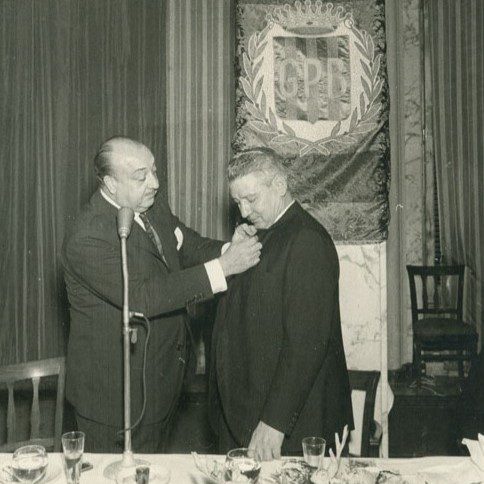
As mentioned in previous chapters, the supporters’ clubs re-emerged strongly following, first, the Club’s golden jubilee and, later, the slow economic recovery of society and the great team of the Five Cups in the 1950s. This period represents the third surge of the FC Barcelona Penyes Movement.
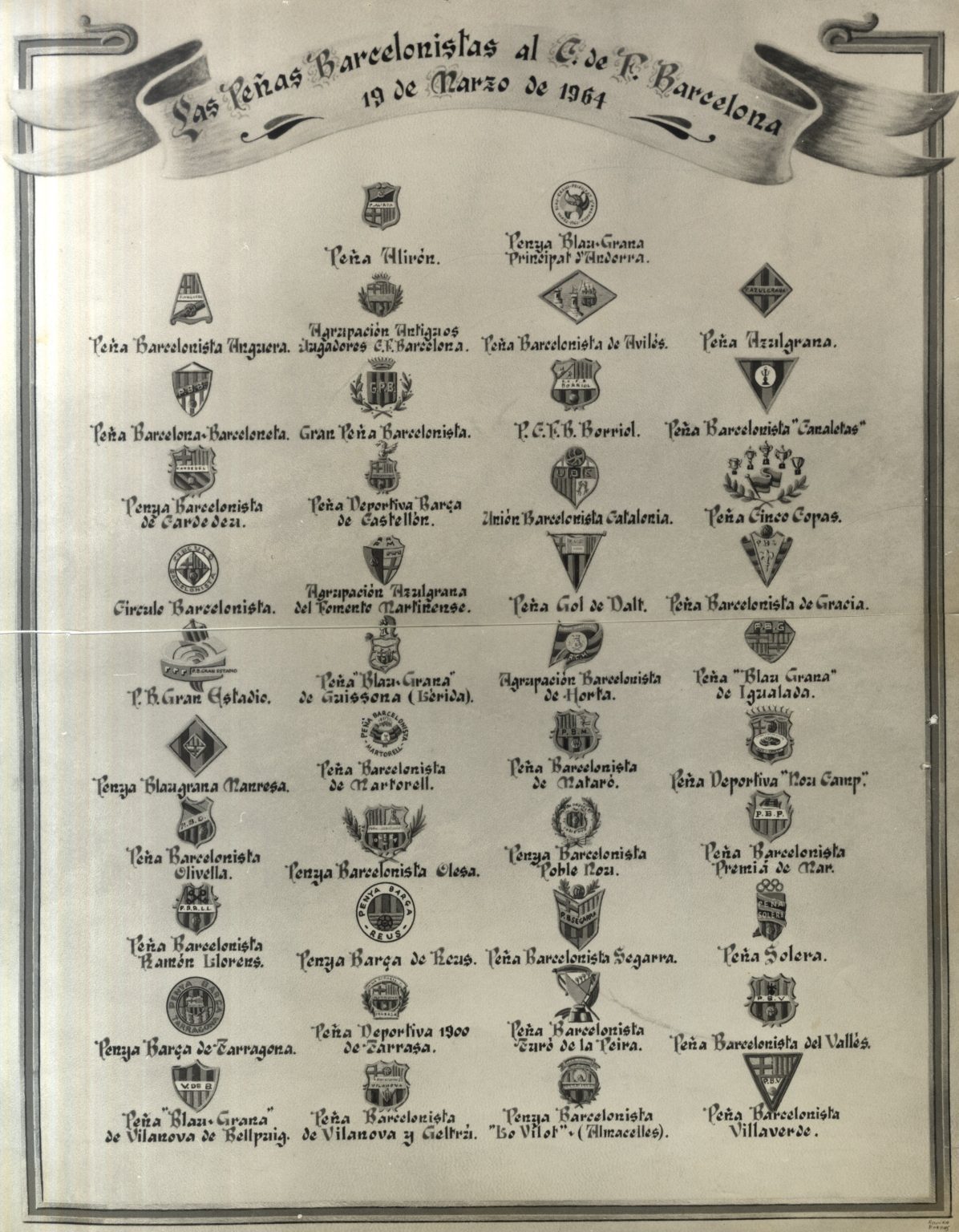
Unfortunately, not all of those that were created have survived to the present day. For some that disappeared over the years, there is information; for others, we only know they existed; and for others, there is no news at all so far. However, some of those we know about appear in a plaque that 42 penyes gifted to the FC Barcelona board. Most of these clubs, created in the 1950s, have since vanished, even though they played a significant role at the time, both in the inauguration of Camp Nou—where some contributed financially—and in later years.
Disappeared penyes in Catalonia
Some examples of these emblematic penyes are Peña Alirón, Peña Barça de Reus, founded in 1950, of which no reference has been found among Barça fans in the capital of Baix Camp. This is important because it would make it the oldest penya outside Barcelona created after the war. The Peña Azulgrana is also a mystery, and it has not been possible to determine whether it had any connection with that old Peña Azulgrana that the football team visited in Igualada in the late 1950s, which would make it the second to survive the Civil War. However, the name is common enough to think it might not be the same.
Other examples include the emblematic Peña Barcelonista Canaletas, located in the very heart of Barça fandom, or the original essence of the supporters’ clubs, the Círculo Barcelonista, which we do not know if it is related to a Cercle Barcelonista that operated during the Second Republic. There is also the Peña Barcelonista de Gracia, founded in 1955; the Agrupación Barcelonista de Horta, from 1959; Peña Deportiva Nou Camp; the Gran Peña Barcelonista de Barcelona, founded in 1955; and Peña Barcelonista Segarra, in honor of the great FC Barcelona captain.
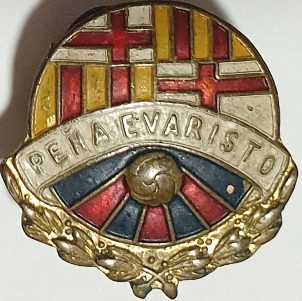
Outside the mentioned plaque, we should also highlight—thanks to our colleague and contributor Joan Vinyals and his “pinspenyes” collection—the existence of a series of penyes of which we only know they existed. No other activity is known beyond what their names suggest. These include Peña Barcelonista Barcino (1948), Peña Barcelonista Olivella (1957), Peña Eulogio Martínez (1957), and Peña Evaristo de Macedo (1958).
The difficulty of penyes during the dictatorship
To conclude with the penyes founded in the 1950s, it is worth noting a fact that disproves theories claiming that the first club outside the Catalan Countries was Peña Barcelonista de Avilés (Asturias) in 1960, now inactive. Recently, it was discovered that the first penya to exist in the rest of Spain was Peña Blaugrana Santa Cruz de la Palma in Tenerife, with credential number 389 according to some sources, and 774 according to others. Its founding date goes back three years before Avilés: 1957.
It is also important to note that, at that time, penyes with social purposes faced more difficulties in being legalized than those with purely sporting aims. These were times of dictatorship when any association was thoroughly investigated before receiving legal papers. Political parties banned after the war began to operate clandestinely, and gatherings of Barça fans were suspected of hiding political activity. Therefore, it was not unusual for official recognition to be delayed—sometimes excessively—until a person loyal to the regime and with authority gave their approval and good references. This is why, in many cases, the founding date of the penya did not match the date when the Club granted official status. In our case, we have always tried to consider the founding date above the date they received their papers.