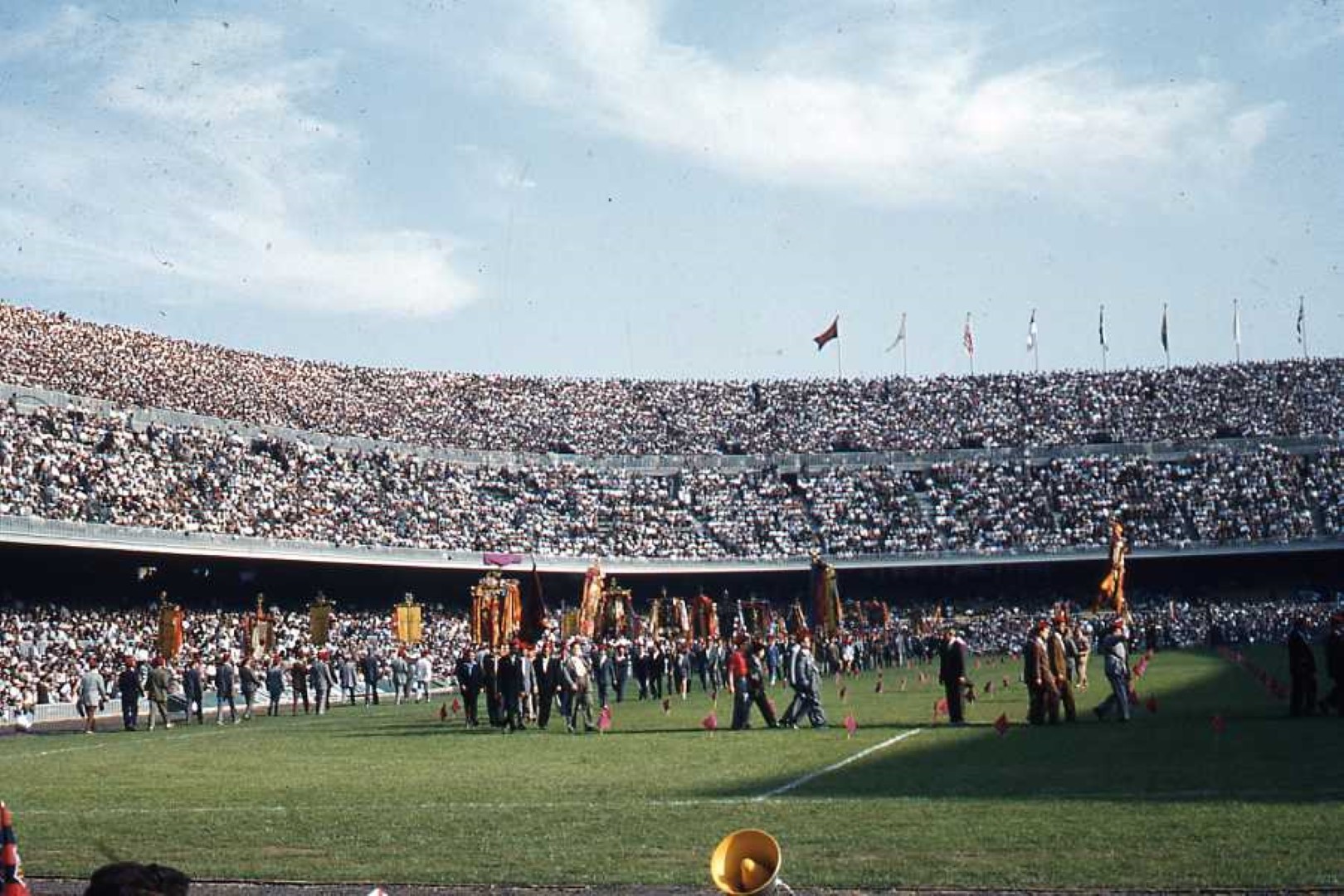
The inauguration of the Camp Nou was an outburst of euphoria among the entire Barça fanbase; an injection of excitement for all culers after the failure of the “Di Stéfano case.” President Miró-Sans took advantage of the land already purchased by Agustí Montal i Galobart and, as a curiosity, it is worth noting that the people, the members, the penyes and even the board had already chosen the name that the new Barça coliseum would bear.
When the authorities of the time learned about these intentions, the National Delegate for Sports, General José Moscardó, informed the Barça president that he should not even think of using that name or there would be consequences. If he wished, he could give it his own name or any other, but not one that was forbidden by the Dictatorship, such as Joan Gamper. Even 25 years after his death, Gamper was still uncomfortable for dictatorships. In the end, no agreement was reached, and the decision was postponed while popular opinion already spoke of the name it would eventually receive: the Camp Nou.
Economic difficulties
The construction had been budgeted at 66 million pesetas but ended up costing 288 million due to a lack of oversight that no one controlled. Miró-Sans spent without restraint or good judgment, and the club nearly went bankrupt. All this led to the resignation of the very president who had pushed the project forward. If we add to this the extremely high cost of a squad built with hefty spending and very expensive to maintain, the financial losses skyrocketed.
Additionally, the authorities did not reclassify the old Les Corts ground until years later, and it wasn’t sold until 1966, when the club had already been in a delicate financial situation for years. To make matters worse, Habitat, the construction company that took over the land, paid in installments, even though people believed it had paid upfront. This severely conditioned the management of the new president, Enric Llaudet, who was forced to prioritize paying off the accumulated debt.
The grand inauguration
The inauguration of the stadium took place on September 24th, 1957, the day of La Mercè, patron saint of Barcelona. Since the laying of the first stone three years earlier, members and supporters had been able to familiarize themselves with the new ‘home’ thanks to an exhibition featuring a scale model that, over two months, was visited by about 125,000 people—evidence of the excitement it generated. The project was commissioned to architects Francesc Mitjans, Josep Soteras and Lorenzo García-Barbón. Mitjans, Miró-Sans’s cousin, traveled around the world studying the best stadiums of the era. The land had cost a total of 32.5 million pesetas, which Montal had paid upfront.
A few months before the opening, a group of penyes submitted a long questionnaire with more than thirty questions to Miró-Sans, demanding answers regarding a situation they considered unclear. Even so, the dictatorship prevented transparency and oversight of the expenses. On the inauguration committee, Nicolau Casaus was responsible for organizing the events, which ranged from an excursion to Montserrat to concerts, open-air festivities, and more.
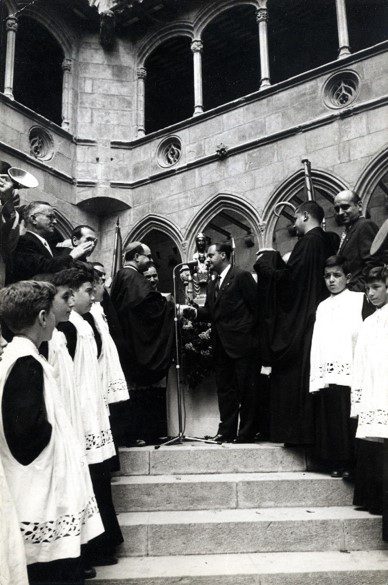
On La Mercè day, under the presidency of minister Solís Ruiz as the highest authority of the regime, the new stadium filled to witness a mass held on the pitch and various performances, including a gigantic sardana involving 1,500 dancers, the Clavé Choirs, and the presence of the Orfeó Català, as well as an endless parade of penyes, Catalan teams, and other sporting groups that joined the celebration.
Inaugural match
The inaugural match was played against a selection from Warsaw that included practically the best players in Poland. Let us recall the first Barça starting eleven that debuted at the Camp Nou: Ramallets; Olivella, Brugué, Segarra; Vergés, Gensana; Basora, Villaverde, Eulogio Martínez, Evaristo and Tejada. Later, Gràcia, Flotats, Hermes González, Sampedro, Ribelles, and Bosch also took part. The coach was Balmanya, and the technical secretary was Josep Samitier.
A “Sami” as cunning as always who, years later, admitted having arranged with the Polish side that Barça would score the opening goal, thinking of posterity. And so it was Eulogio Martínez who scored the first goal ever recorded in the new goals. The final score was 4–2 in favor of FC Barcelona.
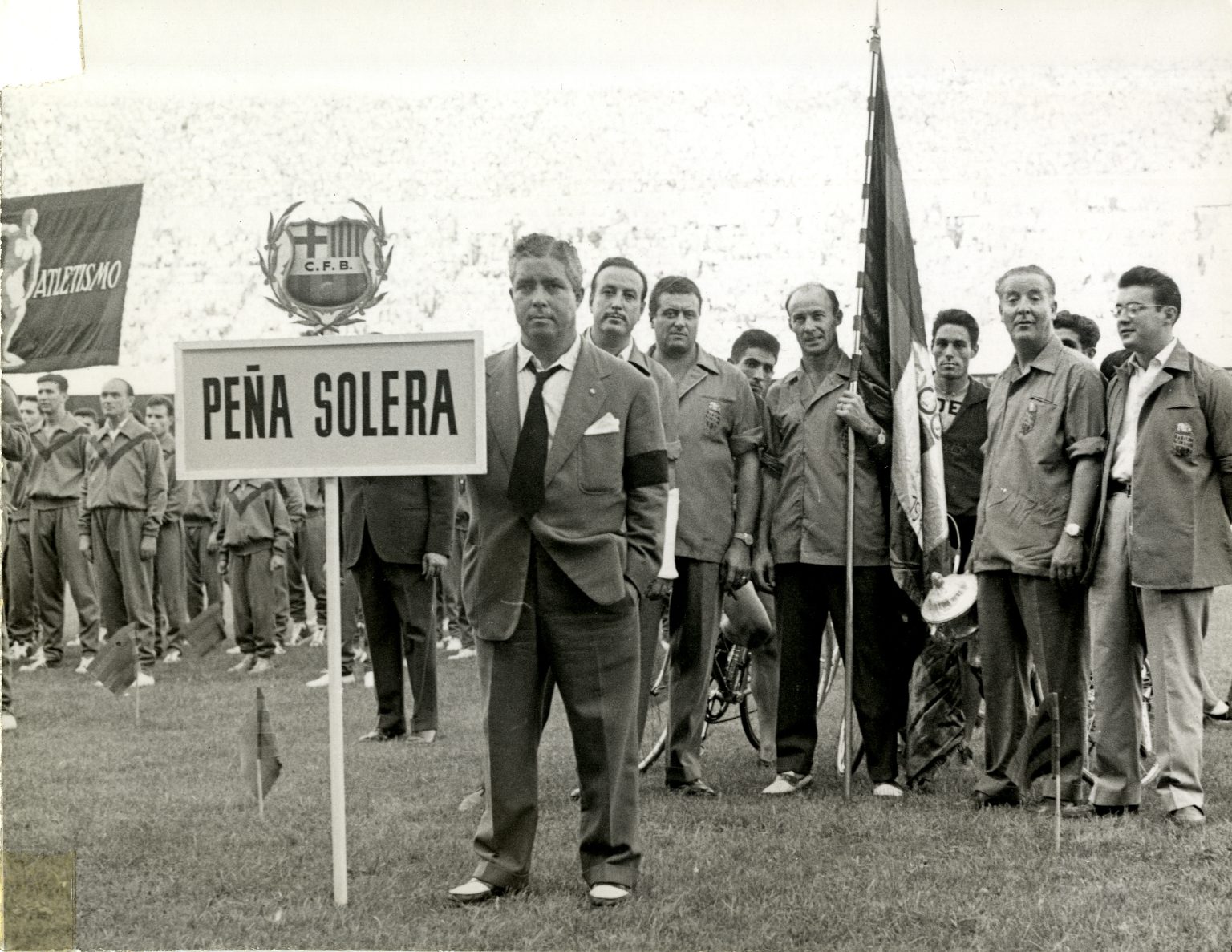
The influence of the penyes
The active presence of the penyes shows the growing importance they were taking within the Club, acting as an opinion group on internal matters and participating in the organization of events, led by the visible figure at the time of the dominant penya: the Penya Solera, represented by Nicolau Casaus. It seems that not even the supporters’ clubs could stop the massive increase in costs compared with the original budget, which became a ridiculous figure compared to what was ultimately paid for the grand stadium.
To conclude, and regarding the construction of the Camp Nou, a legend circulates among former FC Barcelona employees claiming that Madrid did not allow the height of the new stadium’s exterior façade to exceed that of Real Madrid’s stadium. Because of this, and always respecting government orders, it was decided to sink the pitch to increase seating capacity. Another example of how Catalan ingenuity was able to outsmart dictatorships.