If the 1950s ended with the controversy between “Herreristas” and “Kubalistas” and the end of Helenio Herrera’s era, the 1960-61 season seemed to begin with apparent calm, even though the rumours were still rife. That season, the board entrusted the position to an experienced Serbian coach, Ljubisa Brocic, with Enrique Orizaola as his assistant. Despite financial constraints, the club continued to sign new players, bringing in Garay, a veteran centre-back from Athletic Bilbao, and Foncho, a right-back from the Canary Islands who had a long career at Barça.
A very difficult season
Things did not improve with Brocic, and the coach was dismissed when Madrid was already eight points ahead, and the league title was almost impossible to win. To make things worse, director Joaquim Viola, who would later become mayor of Barcelona, declared in a moment of candour that the club was on the verge of bankruptcy. Miró-Sans carried on as if nothing had happened and offered the position of technical secretary to Pedro Escartín, a veteran former referee known for his support of Real Madrid.
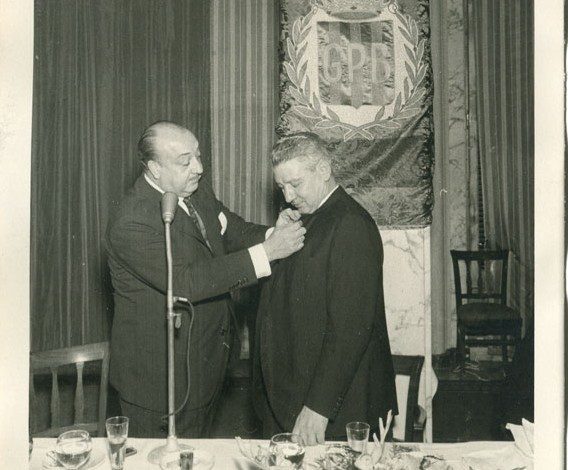
The president showed signs of being lost and, after receiving pressure from all sides, especially from concerned penyes, he resigned at the end of February. This brought an end to Miró-Sans’ controversial term of office, which led to a management team headed by Antoni Julià de Capmany, who set the date for elections in June. This situation of total turmoil was exploited in Milan, where Helenio Herrera convinced Inter Milan president Angelo Moratti to make Luisito Suárez the centrepiece of his project. Seeing the disastrous state of the club’s finances, Capmany panicked and accepted an offer of 25 million pesetas, a huge sum at the time.
Returning to the season, with the league title lost despite a good start, hopes were largely pinned on the European Cup and, once again, the Fairs Cup, a tournament that proved to be another resounding failure. In the round of 16 of the European Cup, they drew the big fish: Real Madrid. The first leg was played at the Bernabéu and both teams put on a high-class duel, which ended in a 2-2 draw. Real Madrid fans complained about the refereeing of Englishman Ellis, who awarded Barça a penalty after Evaristo was offside, but forgot that in the 18th minute of the second half, with the score at 2-1, the referee disallowed a valid goal by Villaverde.
The final in Bern
The time had come to succeed Madrid as continental champions; it was an all-or-nothing gamble, and that is how it turned out. Barça arrived at the final at the Wankdorf Stadium in Switzerland without a president, still under administration, with Orizaola as assistant coach and their biggest star already transferred to Inter. In addition, they were playing against Portuguese side Benfica with a makeshift defence, as two regular starters, Segarra and Olivella, were injured. In a controversial decision, the Cantabrian coach left out players such as Tejada, Eulogio and Villaverde, opting instead for more famous players such as Kubala, who, despite suffering from a herniated disc, was the starting right winger (only theoretically) in that unfortunate match.
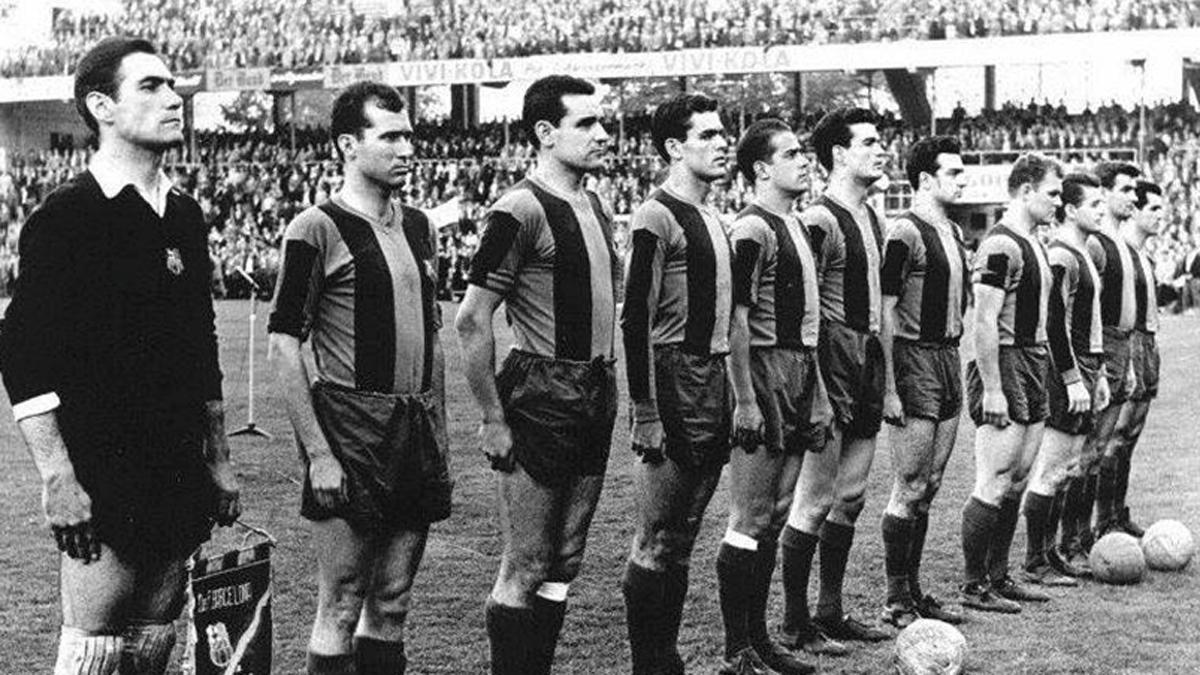
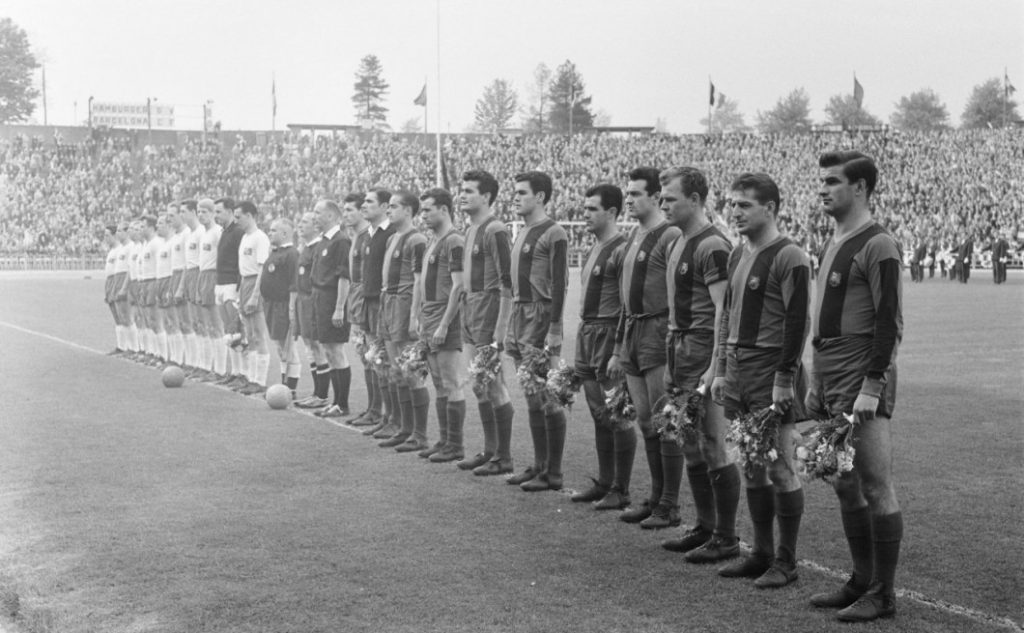
Finally, Barça played the first European Cup final in its history with Ramallets; Foncho, Gensana, Gracia; Garay, Vergés; Kubala, Kocsis, Evaristo, Suárez and Czibor. And everything that could go wrong did go wrong. To begin with, as an anecdote, Czibor and Kocsis already turned up their noses when they saw that the dressing room was the same one they had used with Hungary seven years earlier, when they lost the World Cup final to Germany despite being the big favourites. In the end, the result would be unfavourable for them, 3-2, just like the final between Hungary and Germany.
New growth of penyes
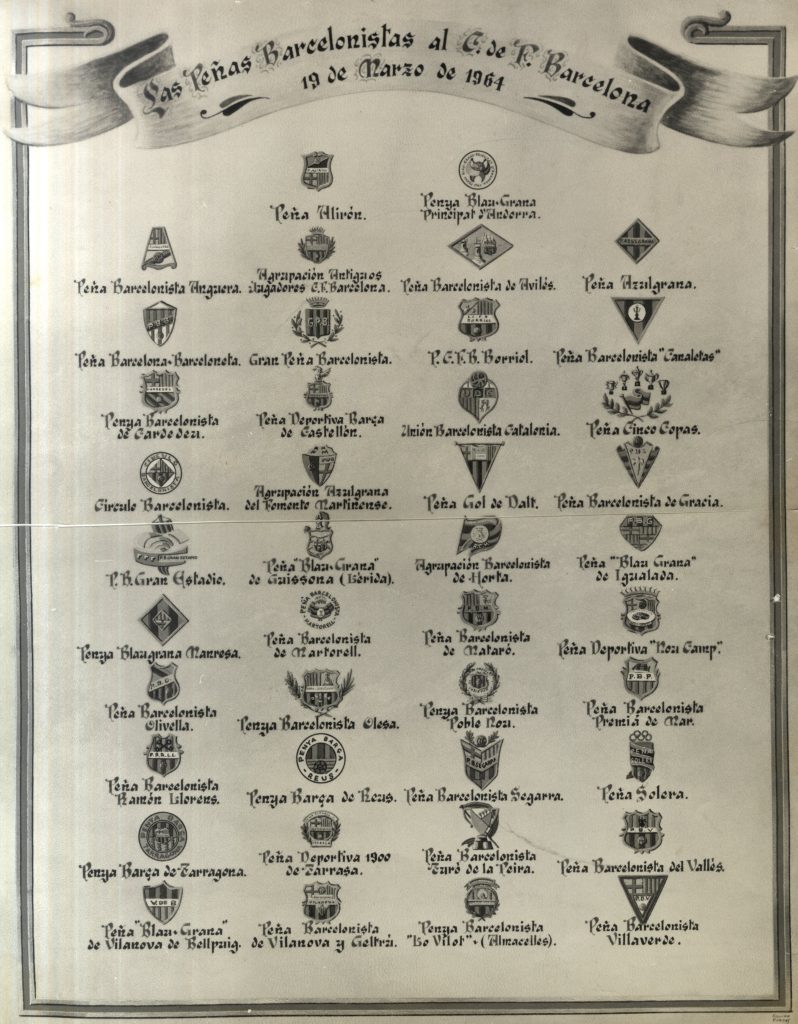
The strength of the penyes began to be significant among Barça fans. Far from giving up in the face of the club’s difficult situation, the departure of Suárez and the end of two legends such as Kubala and Ramallets, the penyes movement was reinforced with the emergence of new entities everywhere: not only in Catalonia, but throughout the country. Thus, this third wave spread like an expansive tide to every corner of the Iberian peninsula.
Of the penyes that appeared after that final in Bern, many have now disappeared, but others are still very much alive. In tribute to this loyalty, many of them will feature in future chapters. Among the penyes that have disappeared are the Penya Barcelonista Olivella (1957), dedicated to the legendary defender; the Gran Penya Barcelonista de Barcelona; and the Penya Barcelonista Lo Vilot de Almacelles (1962), which disappeared in the 1980s and was replaced in 1994 by the Penya Barcelonista Clamor de Almacelles.
These social penyes had many problems becoming legalised due to the constant suspicion they aroused in the Francoist authorities. Some legalisation processes took years, although if the club had any support from the regime, the situation could be regularised. These were times when banned political parties operated underground and social penyes could, according to the authorities, be a front for political activism. This fact gives great credit to all those who succeeded in founding penyes during those times.