
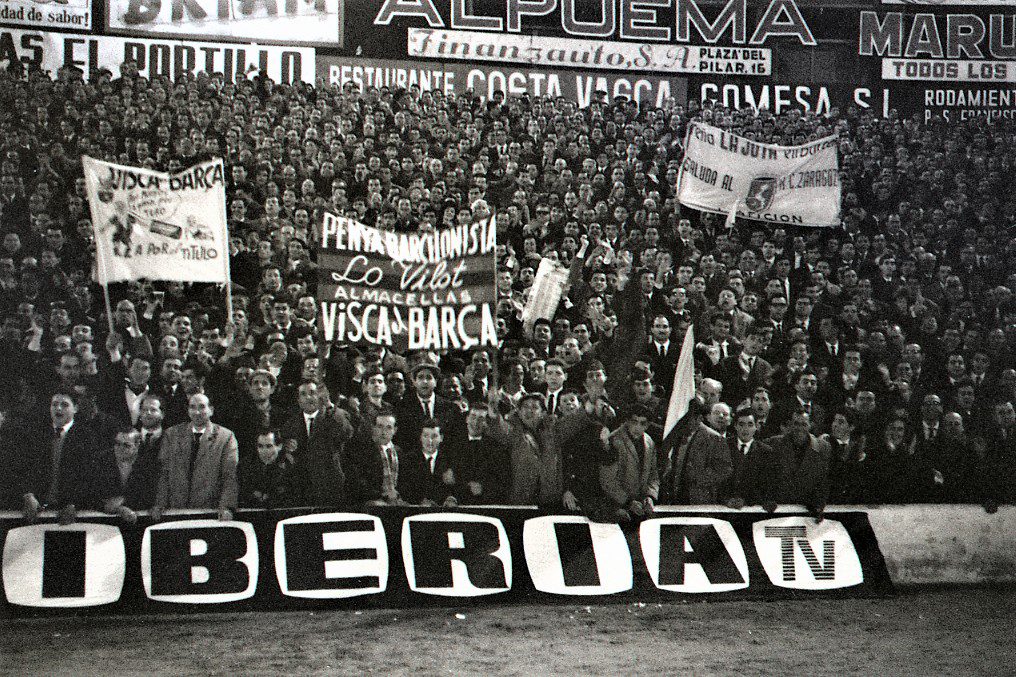
In the previous chapter, an old penya that no longer exists was mentioned: Lo Vilot, from the town of Almacelles. Regarding this former penya, there is a book about the town’s history, economy and society titled “Almacelles, visió d’un poble”, which was published in 1970 by the Penya Barcelonista “Lo Vilot”. In this book there are two curiosities: “La Fera de la Clamor” (the name of the current penya) and “La Marmota del Tossal del Vilot” (from which the first penya took its name). It seems clear that it was a supporters’ club of great cultural level that combined its passion for Barça with other activities of service to the community.
If we go to Reus, we find the old Peña Barça de Reus, founded in 1950 in the capital of the Baix Camp and which, if it still existed today, would revolutionise the movement: it would become the oldest penya, with more than 75 years of history. However, it disappeared in the 1970s and has nothing to do with the current Penya Barcelonista de Reus-Baix Camp, which was created more recently. Furthermore, none of the members of the board of the present-day supporters’ club in Reus have been able to provide information about the former Peña Barça de Reus.
Penyes that disappeared in the 1960s
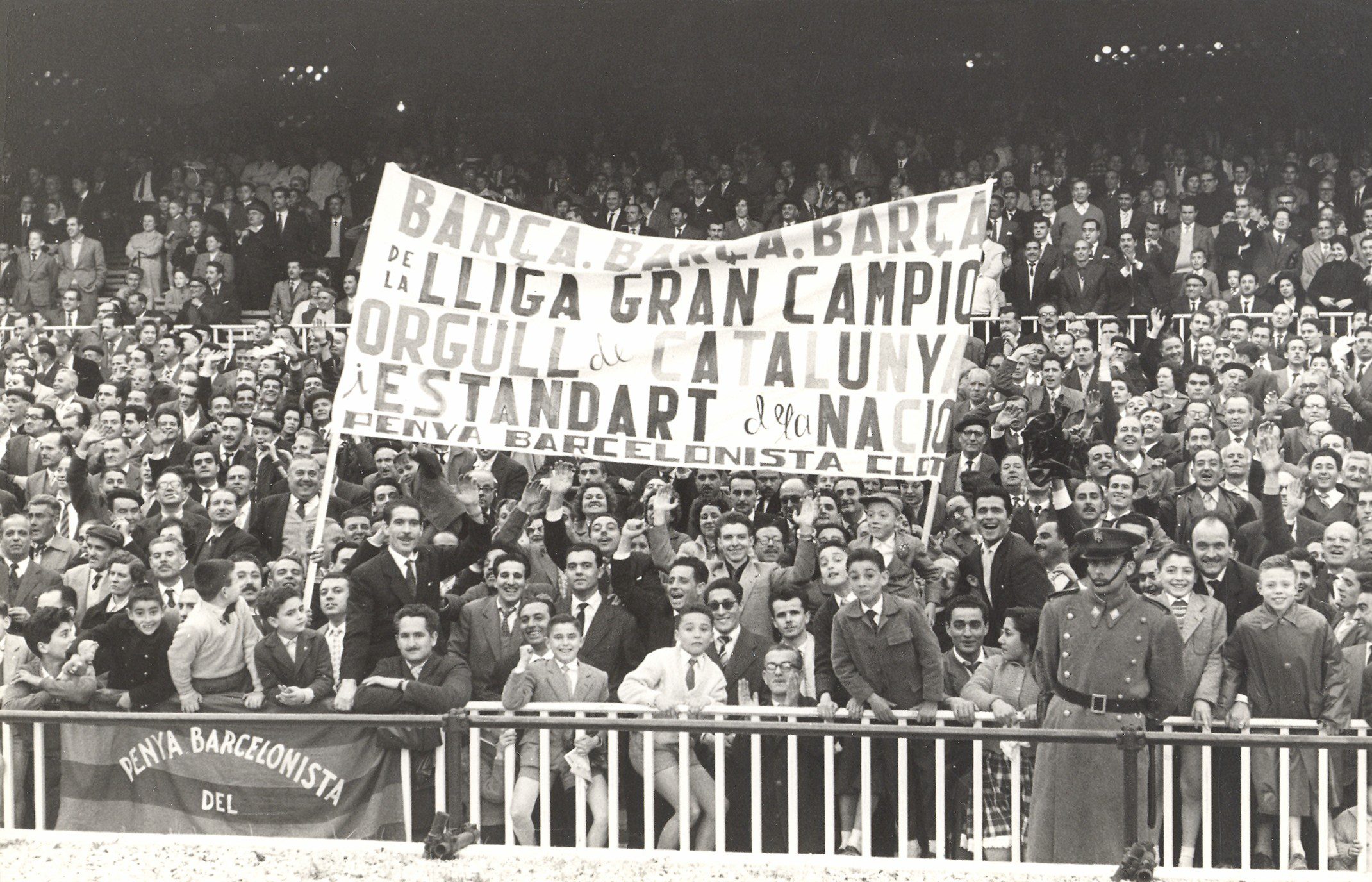
In Barcelona’s district of Nou Barris, specifically in the neighbourhood of Turó de la Peira, a supporters’ club was founded in 1959 that also disappeared in the following decade: the Penya Blaugrana el Clot, which had a great deal of activity. The same happened with the three supporters’ clubs founded in Badalona in 1960: Peña Barcelonista d’Artigues i Badalona Sud, Peña Barcelonista de Badalona, and Peña Blaugrana de Badalona, which also disappeared over time.
In Malgrat de Mar, a penya was founded in 1968 that would also disappear later. In the counties of Tarragona, besides the aforementioned Peña Barça de Reus, there was the Peña Barça de Falset, founded in 1963 and later dissolved. In the counties of Lleida, the Peña Barça de Aitona was founded in 1968.
The memory of Vicenç Reig
In the province of Castellón we find the Penya Barcelonista de Borriol, founded in 1962; this was the hometown of the seventh president in the history of FC Barcelona, Vicenç Reig, who has been the only president from the Valencian Community to have led the club. His term was the shortest in Barça’s history: 22 days. It may be pure coincidence, but the fact is that Vicenç Reig i Falomir, goalkeeper of FC Barcelona in the club’s first decade and president in 1908, died relatively young in Barcelona in 1918 due to illness. It does not seem that the penya was founded in his memory, in the last 44 years had passed between his death and its founding.
It is also worth highlighting that, until Gamper returned to the presidency on 8 December 1908, the presidents of FC Barcelona had no media prominence whatsoever. They were simply first-team players who held the presidency as a mere obligation. Over the years, many descendants did not even know that their great-grandfather or great-granduncle had been president of what is now the most important sports club on the planet.
Also, outside Catalunya
In Andalusia, Ceuta and Melilla we find two more penyes founded in the 1960s that later disappeared: the Peña Deportiva FC Barcelona La Carolina, founded in 1962, and the Peña Barcelonista “El Rincón de Juan” from Aracena (Huelva), founded in 1968. In the region of Murcia, there were the Club Peña de Vistabella-Murcia, founded in 1967; the Peña Barcelonista de Murcia, also from 1967; and the Peña del Barça-Cartagena, founded in 1969.
In Castilla-La Mancha, the Peña FC Barcelona Socuéllamos was founded in 1964, while in Asturias the Peña Barcelonista de Avilés was founded in 1960. This latter penya had long been considered the oldest founded outside Catalonia, but that distinction has now passed to the Canary Islands, specifically to the Peña Santa Cruz de la Palma, unless proven otherwise.
Always leaving the door open to the discovery of new penyes that disappeared during those difficult 1960s, it is only fair to remember and learn about those supporters’ clubs that were also established during that time and that have withstood the passing of time and the many obstacles encountered throughout FC Barcelona’s intense historical journey to the present day. These supporters’ clubs from the 1960s will be the focus of upcoming chapters.