
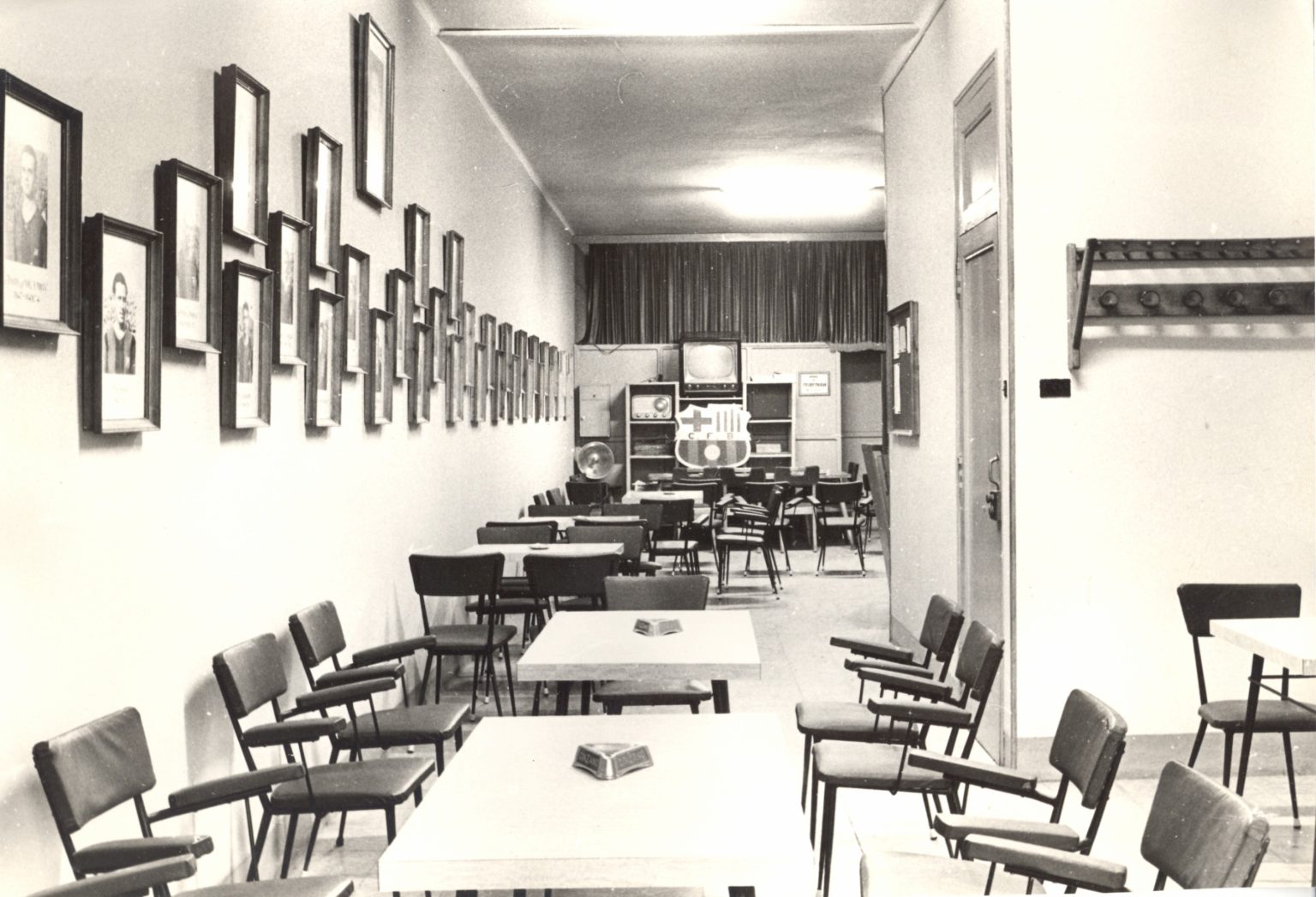
On November 26, 1957, the Penya Blaugrana de Manresa was officially founded thanks to the enthusiasm and good management of a group of Barça-supporting friends, led by David Invers. To establish it, they sought the support of FC Barcelona player Estanislau Basora, who had strong ties to the Bages region.
When the 15th anniversary arrived, on July 16, 1972, the penya organized the 1st Meeting of Barça Penyes in Montserrat, inviting the 102 penyes that existed at the time throughout Spain. During the lunch of that celebration, president Agustí Montal announced to the representatives of PB Manresa the awarding of the first Gold Medal of FC Barcelona as a reward for organizing the event. On February 21, 1974, the same president officially presented the first – aand so far only – Gold Medal ever awarded to a penya.
As a result, the penya gave a replica of the medal to each member, coinciding with its 55th anniversary. This gesture sparked controversy with the Francoist authorities in Catalonia, who pressured FC Barcelona with an unwritten law stating that the first gold medal of any entity should be awarded to the “Caudillo.” Eventually, with clever maneuvering, the situation was resolved and PB Manresa received its distinction, although two years after the Meeting of Penyes.

A history full of meetings
In 1977, PB Manresa and PB Montserrat-Monistrol jointly organized the 2nd Meeting of Penyes, again in Montserrat, which served to honor president Montal, who had decided not to run for re-election. On October 12, 1982, to celebrate its 25th anniversary, the penya organized the 6th Meeting of Penyes in Manresa, with the presence of president Josep Lluís Núñez, who inaugurated a commemorative monument – now disappeared – in the city center: at the intersection of Guimerà Street and Pere III Avenue.
In 2007, the penya published a book compiling the most significant events of its 50-year history. On November 18, 2018, after being postponed for a year due to the political situation in Catalonia, the Penya Barcelonista Manresa celebrated its 60th anniversary.
The city of Manresa
Manresa is a city that celebrates its festivals with intensity and proudly preserves its cultural and natural heritage. The Summer Festival, around the last weekend of August, stands out for the correaigua, correfoc, and fireworks display. In winter, the Festa de la Llum commemorates the miracle of 1345, when a mysterious light convinced the bishop of Vic to allow the construction of the Sèquia, a 26 km canal that still supplies water to the city and ends at the Parc de l’Agulla. This event leads to the Fira de l’Aixada, which transforms the old quarter into a medieval setting, and the Transèquia, a popular walk or bike ride along the canal.
In October, the Fira Mediterrània fills Manresa with folk culture and world music. The city also offers rich architectural and spiritual heritage: the Basilica de La Seu, designed by Berenguer de Montagut; la Cova de Sant Ignasi, where the founder of the Jesuits wrote the Spiritual Exercises; and the Ignatian Way, which follows his journey from the Pais Basco. Balç Street is a living example of medieval urbanism, while modernist architecture is present in buildings such as La Buresa, Casa Lluvià, El Casino, and Cal Jorba. Finally, the Pla de Bages stands out for its winemaking tradition, especially the fruity white wine picapoll. In short, Manresa is a city where history, culture, nature, and passion for Barça coexist in harmony.