

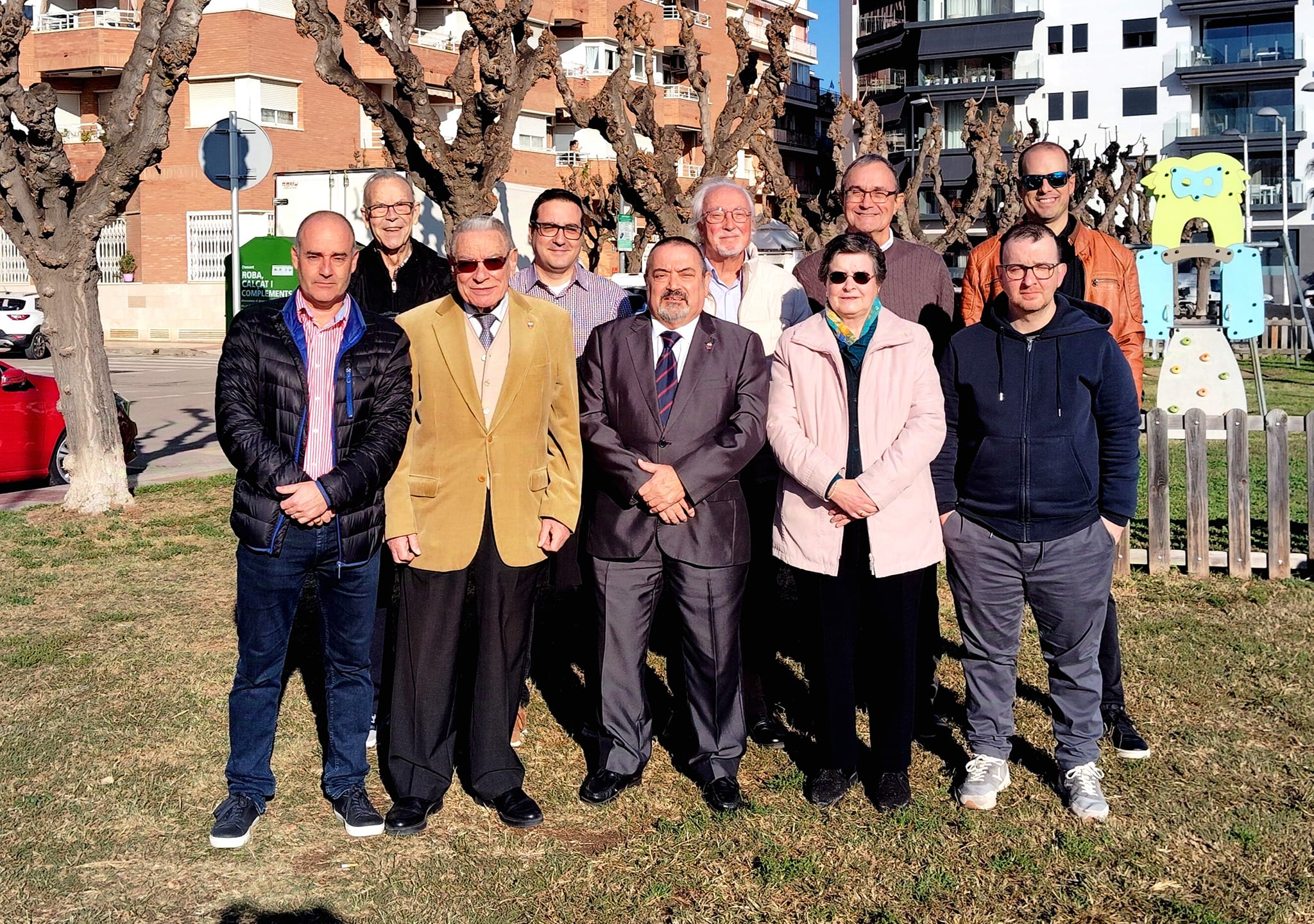
Talking about the Penya Solera Barcelonista de Calella is talking about the history of FC Barcelona, which is why we’ve enlisted the help of three members of the supporters’ club to explain some unique aspects of this organization and its region. They are the president Isidre Argelés i Rodríguez, the historian and writer Josep Maria Colomer i Mir, and the former president and current board member Fernando Ballabriga i Vidaller.
Early years
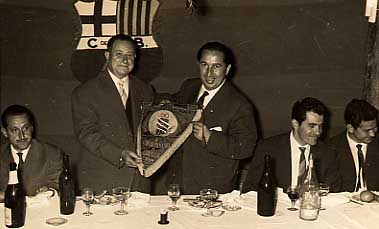
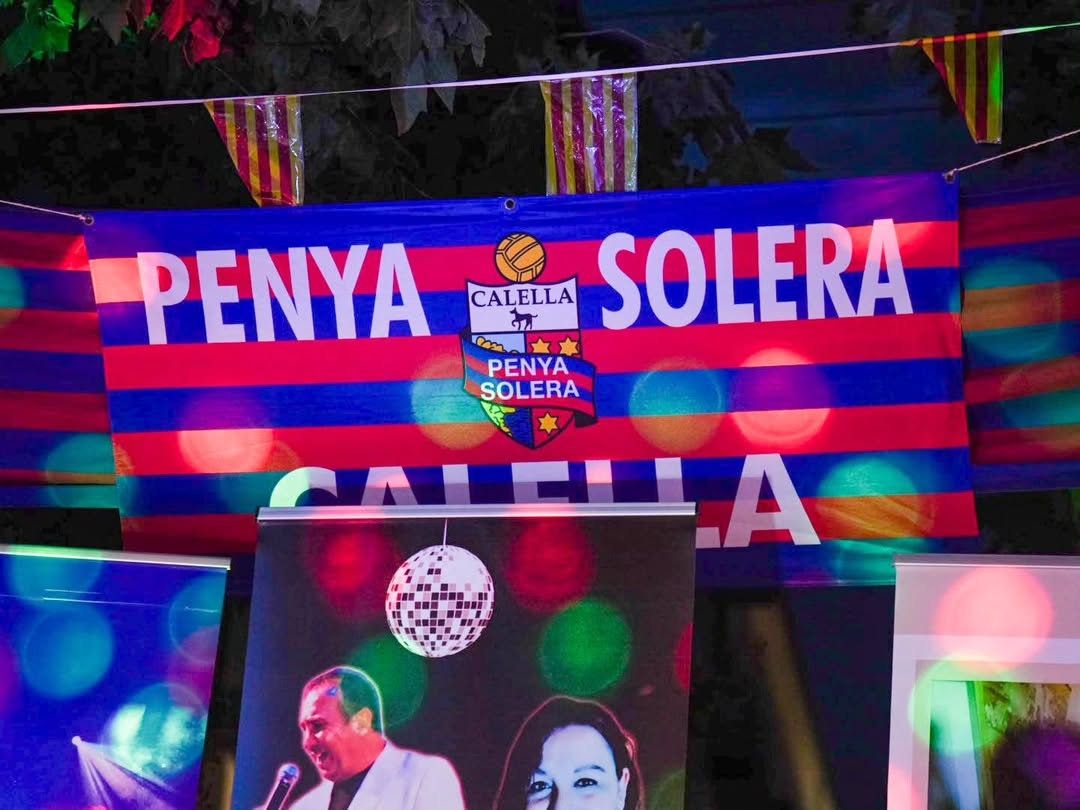
In 1958, six Barça fans from Calella founded the Peña Solera Calellense, headquartered at Bar Moderno in Ca L’Horta, and sponsored by Eulogio Martínez. In 1978–79, on the occasion of the European Cup Winners’ Cup final, a trip to Basel was organized from Can Xena (the new social headquarters), with two coaches led by Josep Roig and his “singing sardine.”
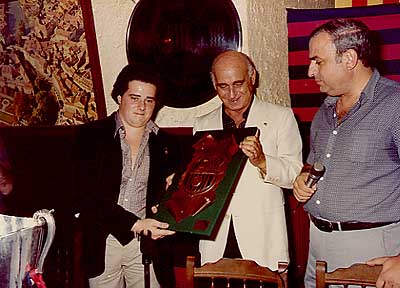
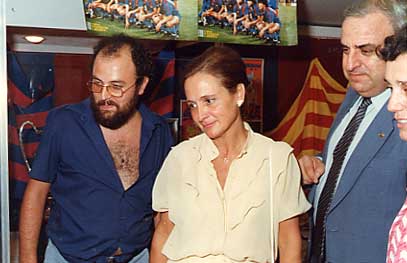
The 25th anniversary of the Penya Solera was presided over by club president Josep Lluís Núñez and his wife Maria Lluïsa Navarro, who was named godmother of the penya and of the inauguration of its flag. Sardanas were danced, with Mrs. Núñez participating, and the mascot “Far i Gol” was created. Over the years, during election periods, several candidates for the presidency of FC Barcelona and many first-team players visited the penya.
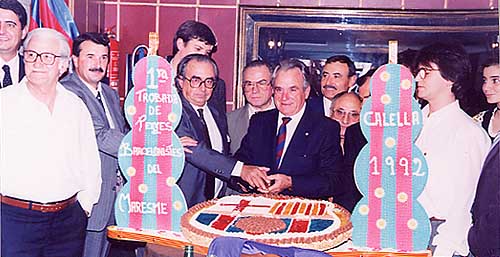
In 1992, the penya organized a flight to Wembley final, departing from Perpignan airport to Stansted, London. On May 13, 1992, the new entity “Agrupació de Penyes del Maresme” was created, promoted by the Calella and Mataró penyes. Joan Juan was elected as the first president. On August 3 of the same year, the name of the club was Catalanized to become Penya Solera Barcelonista de Calella.


XVIII World Meeting of Penyes
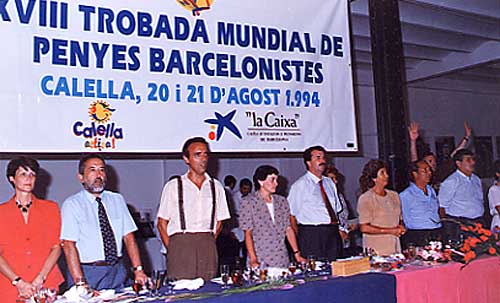
After two attempts, the Penya Solera de Calella was chosen to host the 18th World Meeting of Penyes, which led to the creation of a new image for the penya and a new design for the mascot “Far i Gol.” That World Meeting, held on August 20 and 21, 1994, is remembered for the Samitier Forum under the theme “Barça and the Penyes,” which had a great impact due to the topics discussed. On Sunday, with the presence of President Núñez and his wife, there were unforgettable moments such as the arrival — for the first and only time — of a double-decker train to Calella. Núñez was amazed when he looked out the window and saw thousands of Barça fans waiting on the platforms and even on the tracks.
There was a parade, and the church bell tower was decorated from top to bottom with a Catalan flag, a blaugrana flag, and large photos of Barça players from all eras. A commemorative monument was unveiled, and a fellowship lunch was held at the Llobet Factory with more than 800 attendees. At the end of all the events, Vice President Mr. Mussons exclaimed, “With the Penyes Meeting held in Calella, we can agree that there is a before and after.”

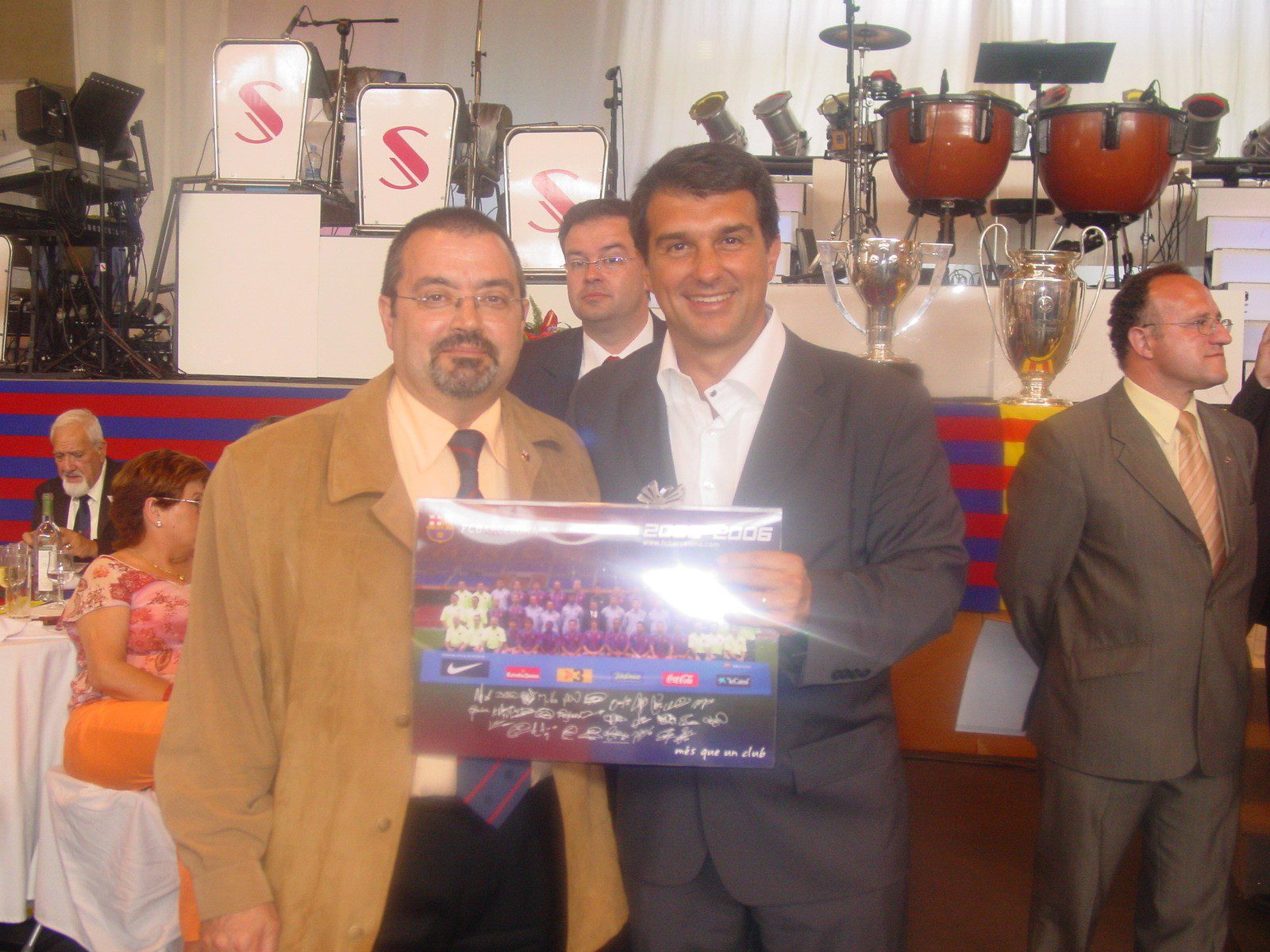
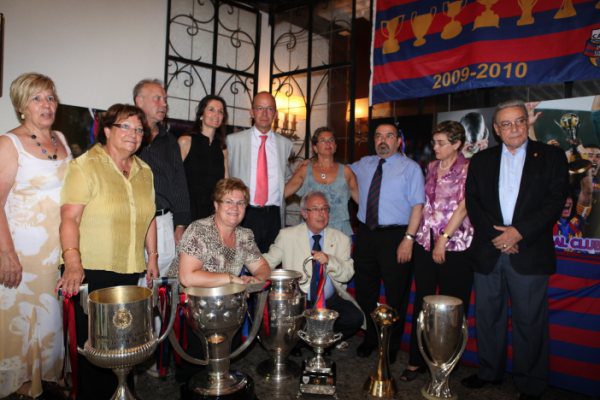
In 2008, the 50th anniversary of the penya’s founding was celebrated. Just days before, President Laporta had narrowly survived a vote of no confidence and arrived just in time for the lunch at the Llobet Factory, decorated in blaugrana colors. Newspapers reported: “Unexpected mass bath for the president in Calella — hostility was expected, but he was cheered by everyone.” He said: “I felt at home.” The full history and memories can be found in “50 Years of the Penya Solera de Calella: A Story of Football, Feelings, and Many Dreams – 1958–2008.”
Current activity
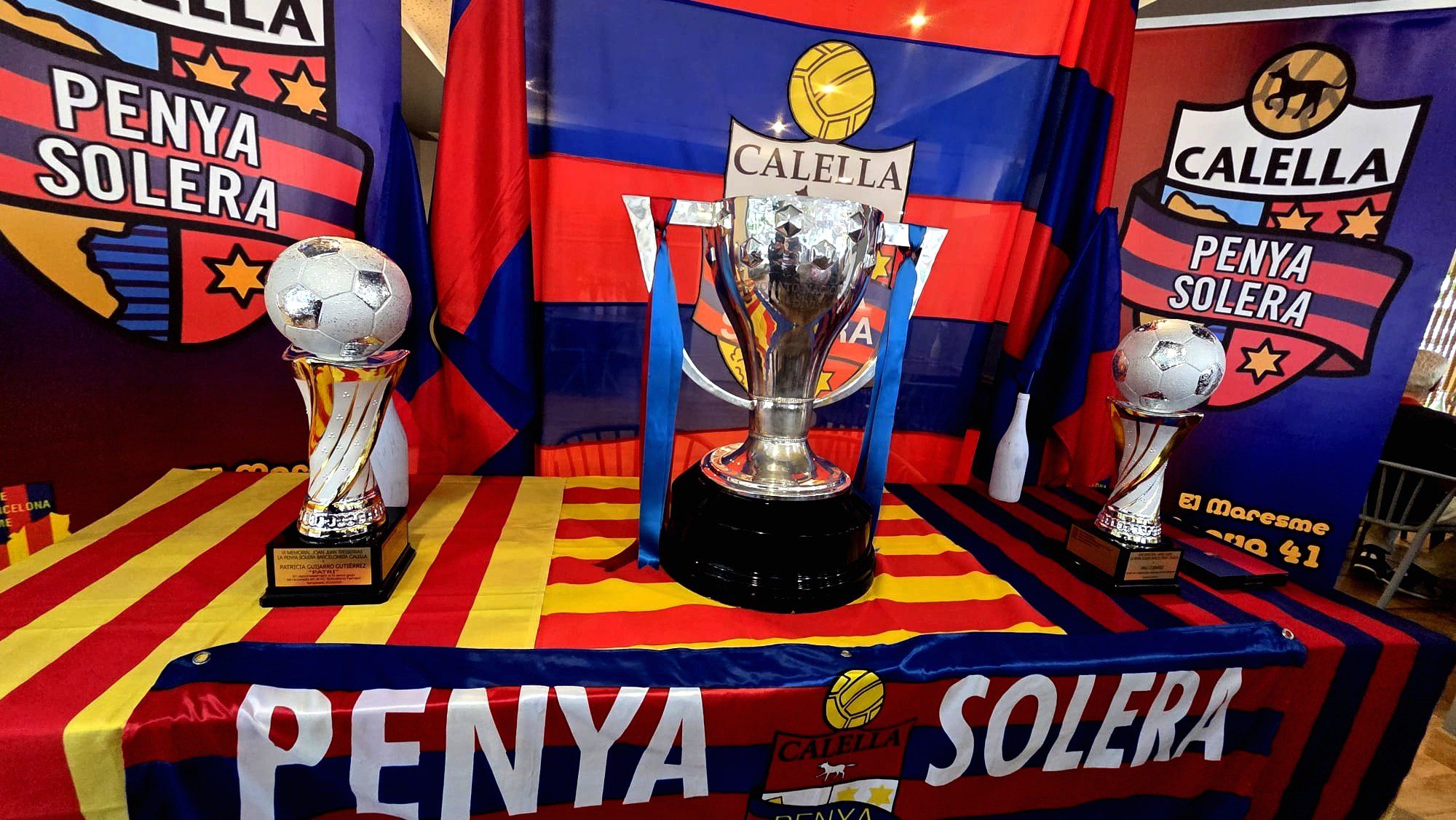
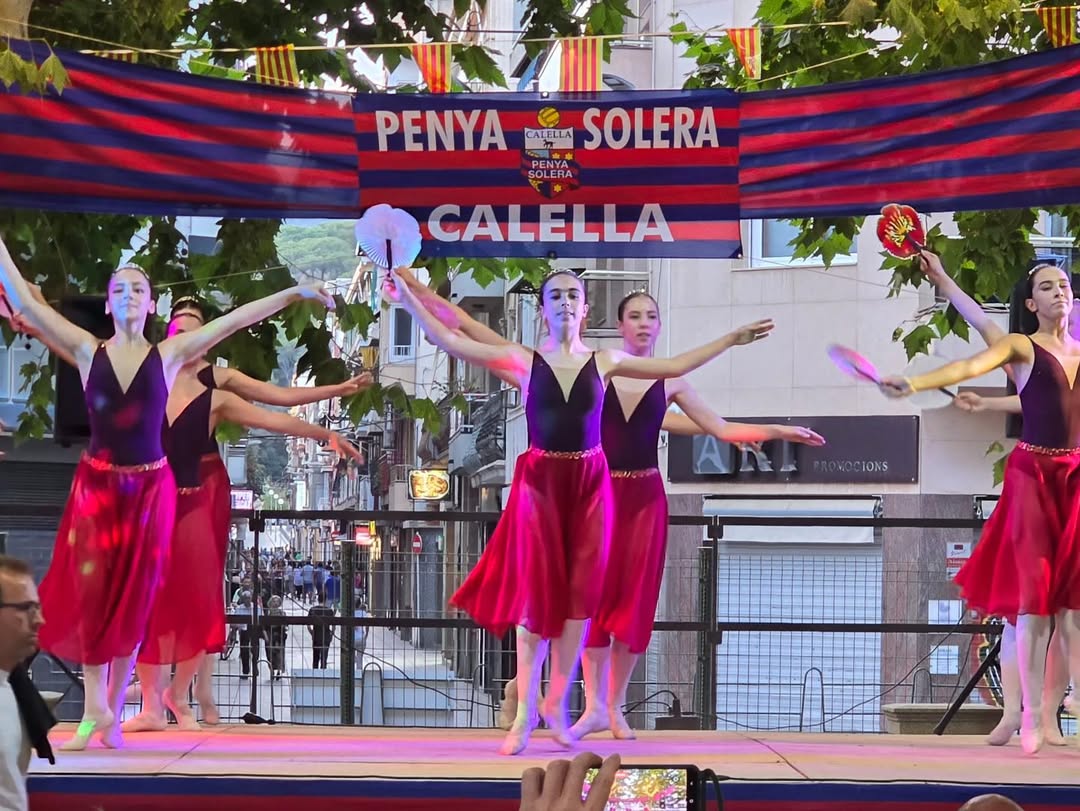
The penya continues its activities, and every season hosts the Mario Munt Memorial, dedicated to the most promising player of FC Barcelona B, and the Joan Juan Tresserras Memorial, dedicated to the best female player of the FC Barcelona Women’s team. Every year, it also celebrates its anniversary with a popular festival over the weekend on Passeig Manuel Puigvert, and with a fellowship lunch at a local restaurant.
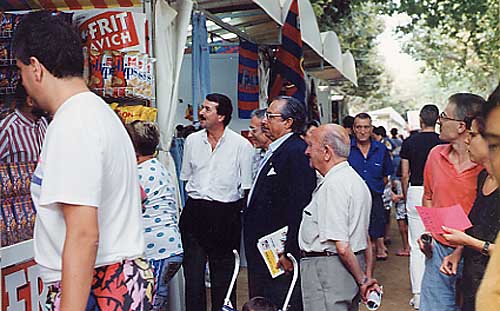
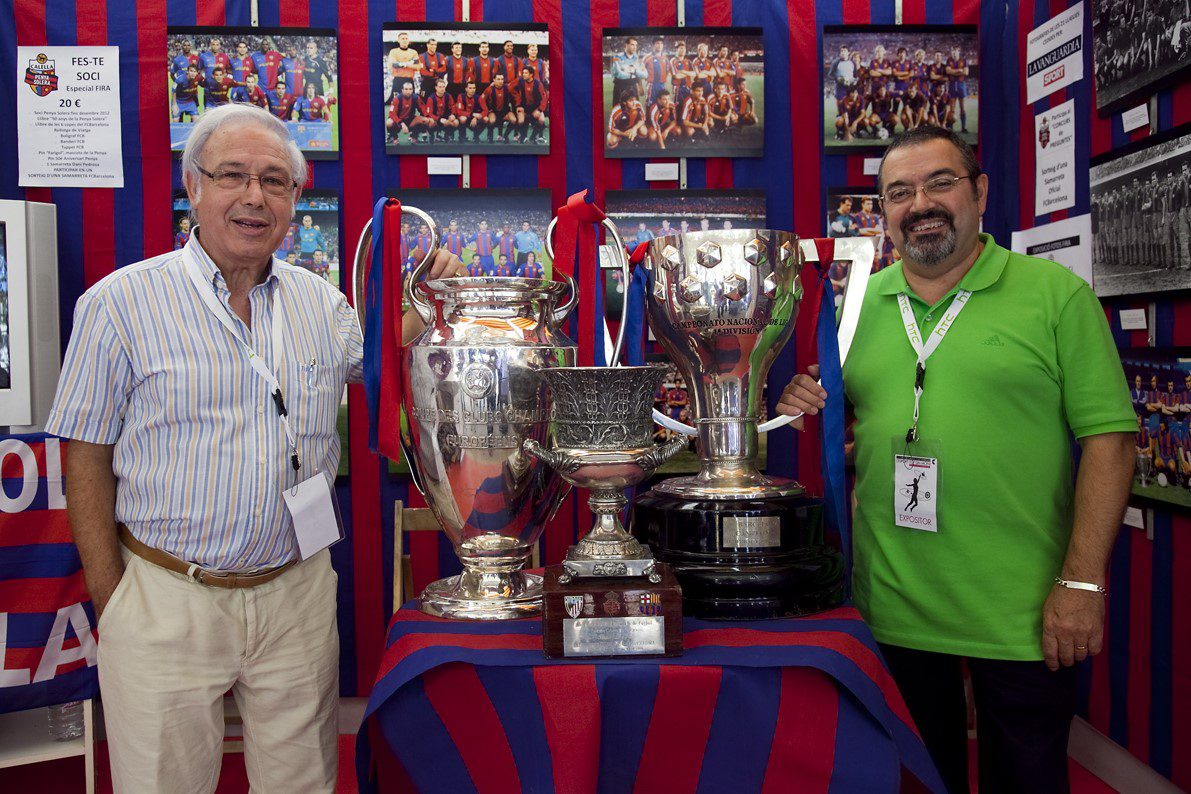
Every September, during the Calella and Alt Maresme Fair, the penya sets up a booth entirely dedicated to FC Barcelona. On November 29 each year, the penya commemorates the anniversary of FC Barcelona’s founding with a gathering that invites all its members.
Legend of the she-wolf of Calella
Regarding the town of Calella, there are several cultural stories, such as the so-called legend of the she-wolf:
One day, Quico Urrelli, returning from inspecting the lands of Mr. Bartrina, said he had a big scare near the Comas stream when he encountered a beast as big as a wolf. A few days later, the event happened again, but this time two beasts were seen. Out of fear and to prevent an attack, the matter was reported to Mayor Casillanis (Fonoi), and a hunt was ordered. They went up the stream and near the place where the sightings occurred, they set up a watch. Soon, lying in the middle of a potato field, the two beasts were found sleeping. At the cry of “fire!” several shots rang out. One of the beasts was killed, and the other fled across the fields.
The wolf, which was a female (she-wolf), was displayed on the porch of the mayor’s farmhouse. The veterinarian believed the dead animal belonged to a new breed of dogs called “wolf-dogs.” Meanwhile, at the Can Moré estate, between Calella and Sant Pol, a woman from the Montané family raised the alarm that the female of her pair of wolf-dogs (a breed unknown to most) had not returned home. Shortly after, the caretaker reported that a wolf had been killed in Calella. Fearing the worst, the woman went to Calella, where she caused a scene at the mayor’s house. She could not be consoled and kept calling them ignorant, illiterate, and many other things. Since then, whenever people from neighboring towns referred to our town, they would mockingly say “Calella the she-wolf.”
Historical monuments in Calella
Despite the spectacular transformation of the town since the 1960s, Calella has largely preserved the urban structure of its original core. The most interesting part of the city is around the Plaça de la Vila, where a market was held from the 14th century, which led to the town’s later growth. Several gothic manor houses are worth noting, which still retain much of their original structure and 16th-century decorative elements, such as arched doorways. In the same area is the chapel of Sant Quirze and Santa Julita, from the 16th century, and not far away is the parish church of Santa Maria and Sant Nicolau, a Baroque work from the 18th century, which preserves magnificent reliefs by Jean de Tours on its façade, originally from a 16th-century altar.
You can also visit the Municipal Museum and Historical Archive, which house works by local artists and historical documents dating back to the town’s origins. In the 18th and 19th centuries, religious foundations such as the Capuchins left their mark. Finally, 20th-century architecture is expressed in various aesthetic styles, with many early-century buildings by municipal architect Jeroni Martorell. Also notable is the enormous complex of the former Llobet and Guri textile factory, now a city heritage site. The lighthouse, emblem of the city, built in 1860, watches over the town and sailors from the top of Capaspre. There are also nature trails to enjoy, such as the Lighthouse, the Torretes, Dalmau Park, the Montnegre mountain range, and ecological routes for walking and cycling.