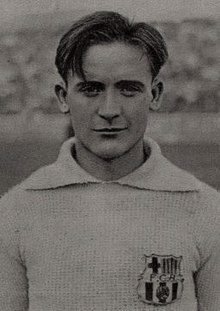
The Penya Blaugrana Ramón Llorens de Rubí, currently located at number 12 Unió Street, was founded in 1960 by four residents of Rubí: Joan Tresserras, Josep Monterde, Joan Llogany and Pau Oller. The name Ramón Llorens was chosen in honor of the FC Barcelona goalkeeper who played for the team before the Spanish Civil War and who would later come to represent the feeling of loyalty to FC Barcelona.
The first president of the penya was Pau Oller, followed over the years by Isidre Forés, Jordi Juncadella, Tomás Capmany, Josep Capmany Soler, Pau Calsina, Isaac Sancristòfol, Ton Vázquez, Mireia Jansà, Pedro Cazorla and Josep Capmany.
The tragedy of the 1984 Copa final
Historically, the penya and its members have accompanied Barça on some of the most memorable away trips in the club’s history, proudly and enthusiastically spreading the name of Barça and the city of Rubí wherever they went. However, tragedy overshadowed the penya when the Copa del Rey final played at the Santiago Bernabéu in 1984, where Barça were defeated 1–0 by Athletic Club.
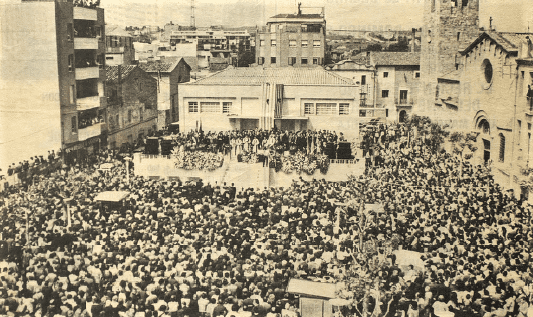
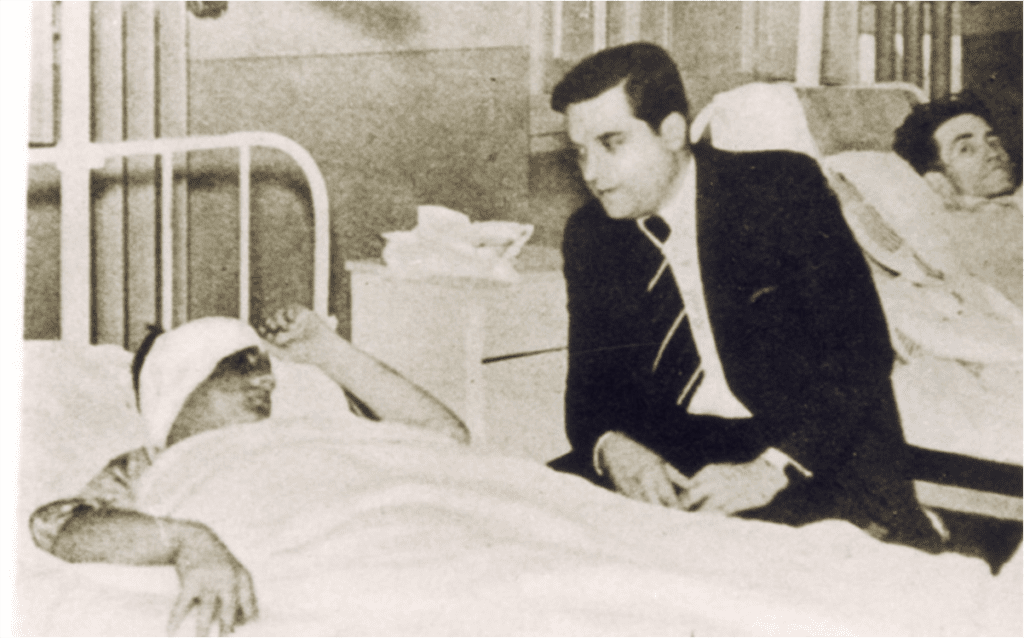
That day, however, the result mattered least… That occasion gave rise to the saddest and most dramatic moment in the history of the penya: the traffic accident involving the coach that was transporting the penya members and supporters from Rubí to Madrid. It occurred on May 5, 1984, and resulted in the deaths of six people, while 49 others were injured. At the funeral, held two days later, more than 10,000 people attended, including numerous national and local authorities, making it one of the most massive and most remembered events in the town’s history.
A penya deeply rooted in Rubí
Since its foundation, PB Ramón Llorens has gone through various stages, with difficult moments as well as good and very memorable ones. One such highlight was the celebration of its 50th anniversary, attended by the then president of FC Barcelona, Sandro Rosell. The penya also takes part year after year, and very actively, in local popular festivities such as the National Day of Catalonia (11 September), Sant Jordi’s Day and the Town Festival, among others. Its sporting dimension is also a defining feature, as it belongs to the FC Barcelona Football Supporters’ Clubs Federation. In short, it is a penya open to all members and Barça supporters in general who wish to visit the area.
As for the city of Rubí, essential places of interest for any visitor include the Town Hall, the Church of Sant Pere, the Castle, El Celler, the Torre Bassas, the Ateneu, the Ribas School, Ca n’Oriol and the Vallhonrat Ethnological Museum. Rubí is internationally known thanks to the Esbart Dansaire association, founded in 1923 and dedicated to the teaching of Catalan dance, the production and performance of shows with its dance company, and the preservation and dissemination of Catalan traditions. It received the National Dance Award in 1985 and the Creu de Sant Jordi in 1997.
Who was Ramón Llorens?
The adjectives that could define Ramón Llorens would be: “a warm-hearted person, a man of the house, love for the colors, and a fighter for his Club.” And surely many of his colleagues would add several more without exaggeration. He was born in Barcelona, in the Poble Sec neighbourhood, on September 1, 1906. At the age of 20, he made his debut in goal in a friendly match for a Barça team full of substitutes, in which the standout was the star signing, considered the best player in the world at the time: Uruguayan Héctor Scarone. However, this player failed to adapt to the team and returned to Uruguay a few months later.
Loyalty to the colors between the posts
Llorens alternated between being a substitute and a starter, as the goal was covered in those years by the legendary Platkó. When the Hungarian giant (almost 1.90 meters tall, compared to Llorens’ 1.64 meters, which he compensated for with outstanding reflexes) was injured in the famous three-match 1928 Spanish Championship final, Ramón Llorens’ great opportunity arrived. He gave everything in the second and third matches of one of the most closely contested championships ever. With the title secured in the third match (3–1), he reached glory.
Despite continuing to alternate between starting and substitute roles, with Platkó and Nogués ahead of him, he never gave up and demonstrated his love for the Club to such an extent that when the club attempted to release him in 1933, he asked to remain as an amateur substitute player. Without earning a professional salary, Llorens stayed at the club well into the Civil War, playing some important matches and many friendlies.
At the outbreak of the war, Llorens became part of the Employees’ Committee that saved the club from being taken over by the militias; a committee that ran FC Barcelona after the disappearance of president Sunyol in August 1936. From 1937 onwards, Llorens returned to goal, but two of the many bombings by fascist Italian aviation that targeted the Catalan capital directly affected him. This prevented him from joining the first team tour of Mexico and the United States, although between 1937 and 1938 he still played in more than 30 matches.
His time as coach and club employee
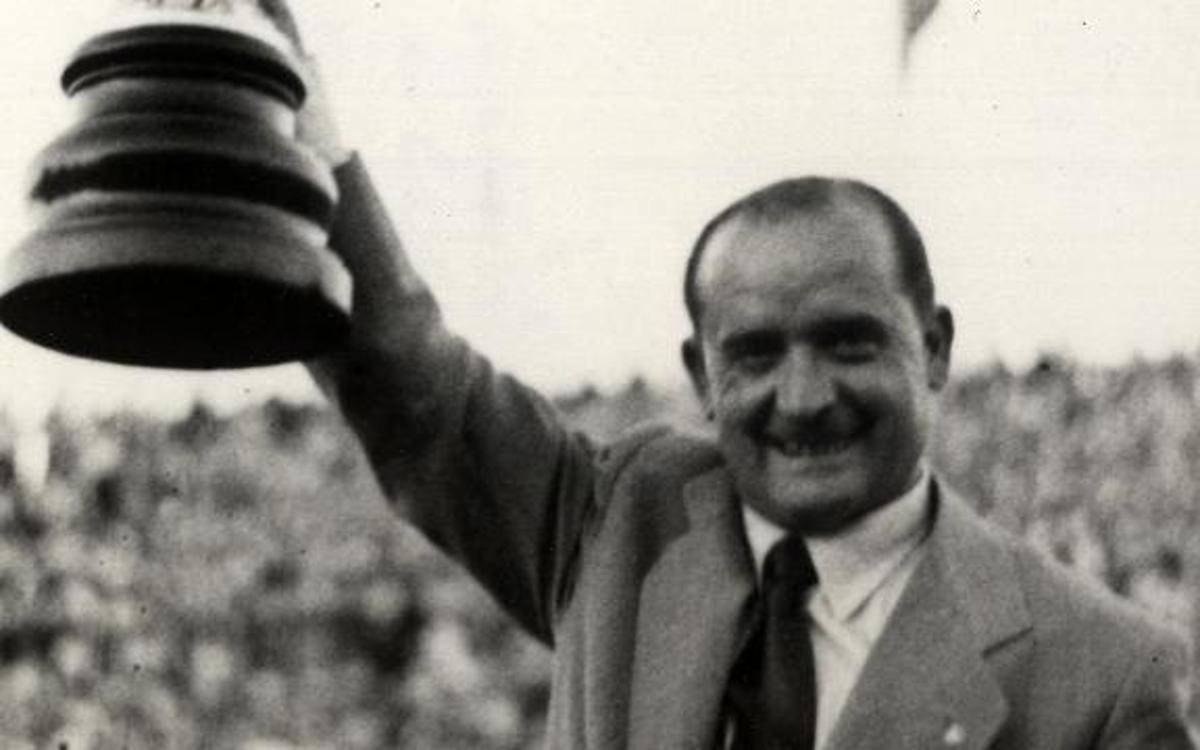
After the war ended and he hung up his gloves, Ramón Llorens continued serving FC Barcelona, taking charge of youth teams and discovering emerging players such as Biosca, Bosch and Manchón. On January 29, 1950, he made his debut as head coach of the first team, assisted by Samitier, who was then the club’s technical secretary. In that debut, Barça defeated a strong Deportivo de La Coruña side 2–0.
With the arrival of Kubala and the appointment of Daucik as head coach, Llorens returned to his previous roles within the Club. On June 15, 1952, he received a major tribute at Les Corts, although he continued to serve Barça afterward. In the early 1970s, he completed fifty years of service to the Club, always available wherever he was needed.
Unconditional love for Barça
Llorens travelled with the team, and his experience served to advice players, always from the background and without seeking attention. On FC Barcelona’s 75th anniversary, he stated: “Barcelona has given me much more than I have given it. I have given my services to the club, but Barça has given me my life.” He added: “Barça owes me nothing, but I would like that when I die, I am wrapped in its flag, which is mine. I would like that, once I am gone, Barça supporters can say that I have rendered some service to the Club and that the players, whoever they may be, dedicate the first goal of the next match to me.”
These words exemplify what true love for a club means and greatly honour the penya that has ensured this great player and his example will never be forgotten.
Ramón Llorens passed away on February 4, 1985, at the age of 78. It is unknown whether in the following match, against Espanyol in the Copa competition, Schuster or Carrasco remembered to dedicate the three goals with which Barça defeated their rivals to Llorens. Be that as it may, less than two months later, Terry Venables’ FC Barcelona was crowned league champions. Eleven years had passed since the last title. There could be no better tribute to a warm-hearted man, a man of the club, the human embodiment of pure love for a set of colours.